One year ago, my partner and I packed up our lives and moved from the UK to Sweden. It feels both like time has gone by so quickly, and yet memories of moving also feel like they were last week. It’s a very odd feeling.
Moving abroad and experiencing life in another country has been a life goal of mine for a long time, especially after Brexit, and I’m super glad we took the opportunity. It was made a little easier through my employer - I moved for an existing role, to join a team I previously worked for remotely. That did not make it “easy”!
# Moving day
We used a moving company and most of the cost was covered by my employer. We disposed and recycled a lot of stuff ourselves, and the amount of stuff you accumulate over the years without realising it is astonishing. I think we counted over thirty bags of stuff to dispose of. It was very odd to see our apartment empty at the end when we handed over the keys, which we posted through the door. We wanted to go “all in” so we actually sold our apartment before we moved. Unfortunately that was delayed by a few days, meaning I had a huge tax bill to pay in Sweden as a new resident.
Moving countries means your stuff has to travel for quite a long time on a shipping container, so we bought four big suitcases and brought our essentials with us on the flight. The people actually moving our stuff were great on both sides, but the company coordinating was truly dreadful, and their lack of experience with Sweden unnecessarily delayed our stuff getting to us by about two months.

# Swedish practicalities
It is hard to exist in Sweden without being “in the system”. Almost everything runs on “BankID” for identification, for which you need a bank account, for which you need a “personnummer” (like a national identity number in the tax system), for which you need a residence permit card, which is not automatically given to you on arrival.
In busy periods it can be difficult to find appointments for each of these steps within weeks, and every single step seems to have a “two week” processing time. We did pretty good and managed to get set up with a bank account in around three months by being diligent and checking for new appointments every day, and following up within a few days if the process stalled. Because the bank account is the last step in the process, until we got an account, we lived mostly from our Wise card. I still don’t exist publicly on the tax system with registered income, which is used for things like credit scoring, which has its own problems. I’m hoping to fix that shortly so we’re in a good position to buy an apartment next year.
Unions are especially important in Sweden, and I was surprised to find that in the Swedish employment model, unions often set the “minimum” salary and working conditions - though this isn’t super relevant in the tech industry. Regardless, I joined a union shortly after beginning work in the country. Related to the union, Sweden has a very robust social security system, including “a-kassan” which you pay a small amount in to each month, and build up your social security coverage should you lose your job. Mine is provided by a company affiliated with the union. After ~1 year the rate is ~80% of your final salary and reduces each month whilst you search for work.
People take their work-life balance seriously, and it is much easier to take rest when you need to. I’m glad I have time to learn the language, play sports, cook new things and hang out with my partner more. There is apparently a legal right to taking time from work to learn the language, but my work is pretty flexible anyway.
Stockholm empties out significantly during “Swedish summer”, where most people take at least three weeks of holiday between July and August. I’m not much of a summer person so I’m happy to work over this period as cover for people who like taking summer holidays. This is a huge difference from Edinburgh, where I used to live, which would become unbearably busy leading up to the Fringe Festival every year.
# Learning the language
I feel it’s important to learn the language of your host country if you plan on living there a long time. I enrolled in “SFI” which is a free course to learn Swedish. If you’re a professional or are generally educated you’ll end up in “SFI C” course which teaches you to A2 level.
Going from nothing to being generally conversational, in a new language, whilst working, is very difficult - even if the language is one of the “easier ones”. I hadn’t originally planned to join a course, but it became very clear that learning the language through “osmosis” wasn’t going to happen. Sweden has a very high English literacy level, and it’s very easy to fall back to English, which is a blessing and a curse.
People generally don’t assume English for me and will start in Swedish, and I can reply if the conversation is relatively simple. Given we want to live here for a while, it feels important to get a head start with the language. My long term goal is to be fluent, to C1/C2 level.
Friends and colleagues have had mixed experiences with SFI, but mine has been quite positive. Your enjoyment depends a lot on the teacher you get, and I’ve been relatively lucky with my teachers. It’s very different choosing to learn a language, compared to being “forced” at school - and learning alongside other people who also want to learn.
Some good Swedish resources:
- “Folkets Lexicon” https://folkets-lexikon.csc.kth.se
- svenska.se
- Claude or other LLMs as learning tools (“explain this phrase”, “how would you say this idiomatically”), with additional guidance and correction from an expert like a teacher
The novelty of having new letters (ä å ö) to play with still hasn’t worn off.
# Living on a visa
The hardest part of moving abroad for me has been living on a visa whilst much of the west goes through a shift to the right politically. After Brexit I’m from a “third country” so many rules and changes of law affect my residency in ways that Swedish people seem surprised about. I’m working on confirming my Polish citizenship through my grandparents, and I get a lot of rights through my partner who is European, but his industry often requires Swedish so learning that and finding work will take time.
The way that Sweden has changed its citizenship requirement is quite scary to me, and the process has been quite dissonant with wider Swedish culture. I think it’s totally reasonable to introduce language and civics requirements to gain citizenship, and quite unreasonable to have multi-year queues with the rules change retrospectively for people who have been waiting.
If Sweden wants to attract highly skilled talent they must recognise that people need to feel secure in the country and not like they could be ejected at a moment’s notice. 3 months is not enough time for professionals to find another job these days.
# Seasonality
The seasons feel quite pronounced in Sweden, which I really enjoy. In the summer it can be 25-30c and in the winter it can be -15c. I really enjoyed visiting Kiruna up in the arctic circle, and feeding reindeer. To be outside in temperatures like that you definitely need to have good winter clothes.

Swedish buildings are set up to withstand the cold weather, so in the summer everywhere can feel quite hot. We got a portable air conditioner which helps take the edge off. But you find yourself very grateful for the heating infrastructure in winter!
# Transport
Stockholm has an extensive and extremely affordable public transit system called “SL” (Storstockholms Lokaltrafik), comprised of fully-integrated bus, tram, train, ferry, and subway systems. I pay roughly the equivalent of £100 (~1300 SEK) every month for unlimited transit use. We use “kollektivtrafik” every day to get to work and travel everywhere, and don’t need a car to get around.
The subway stations are individually styled and the system is like an art exhibition. We’re particularly fond of getting on the commuter ferry out to Ropsten and then getting the subway back.

# Food
I’ve been vegetarian for a long time and we were a little bit nervous about the food situation in Sweden, but those fears proved entirely unfounded. It’s easy to find great vegetarian food, though the choices are a little different to the UK.
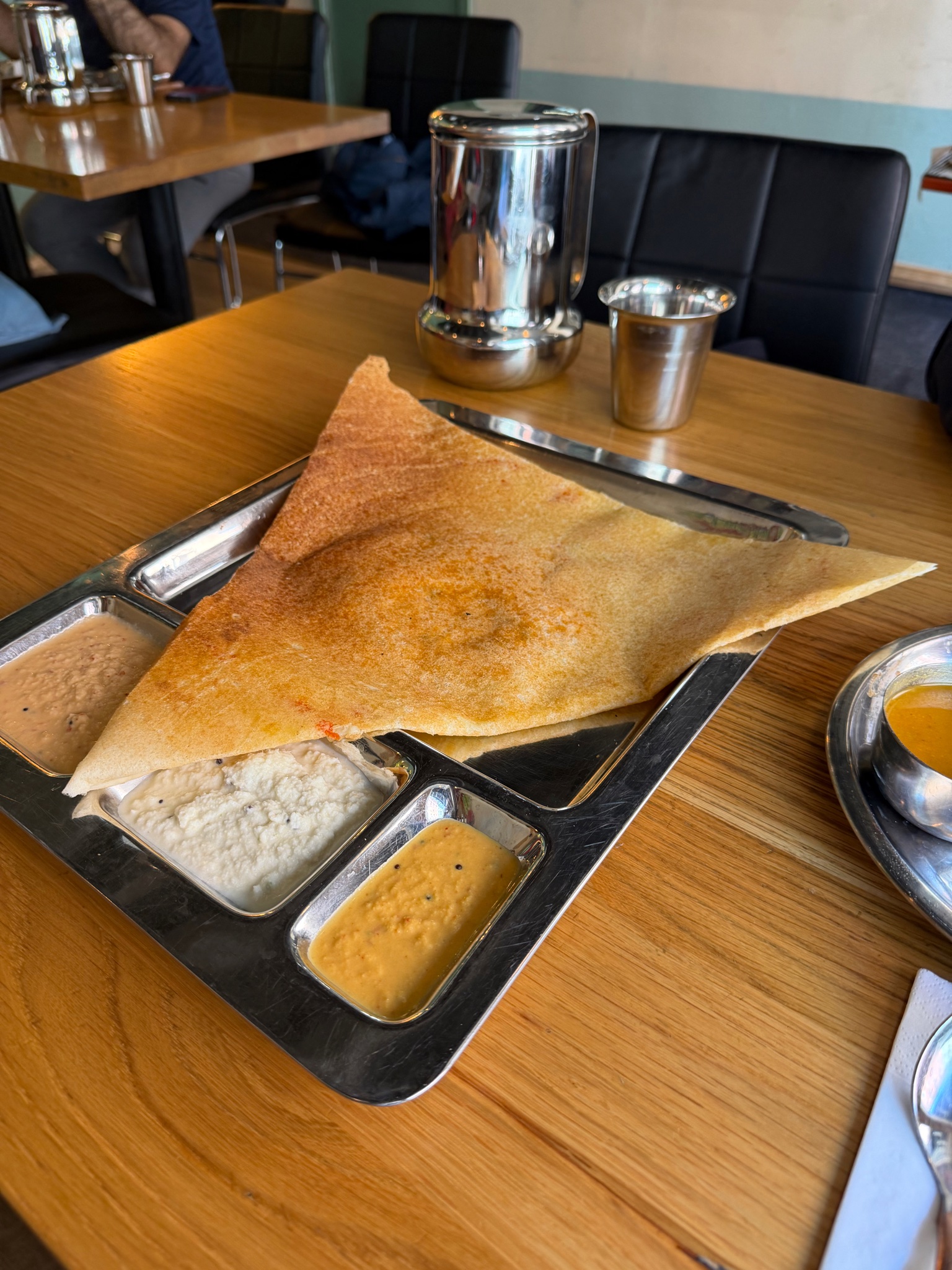
We were happy to find a bunch of good Indian restaurants and we’ve kept our tradition of “Friday curry” alive. Food is also quite seasonal, with Semla season happening around Easter, and Julmust appearing near to Christmas. Sweden has a strong cultural connection with Thailand which is a relatively new cuisine to me, but I’ve come to really like it, and most dishes can have meat substituted with tofu.
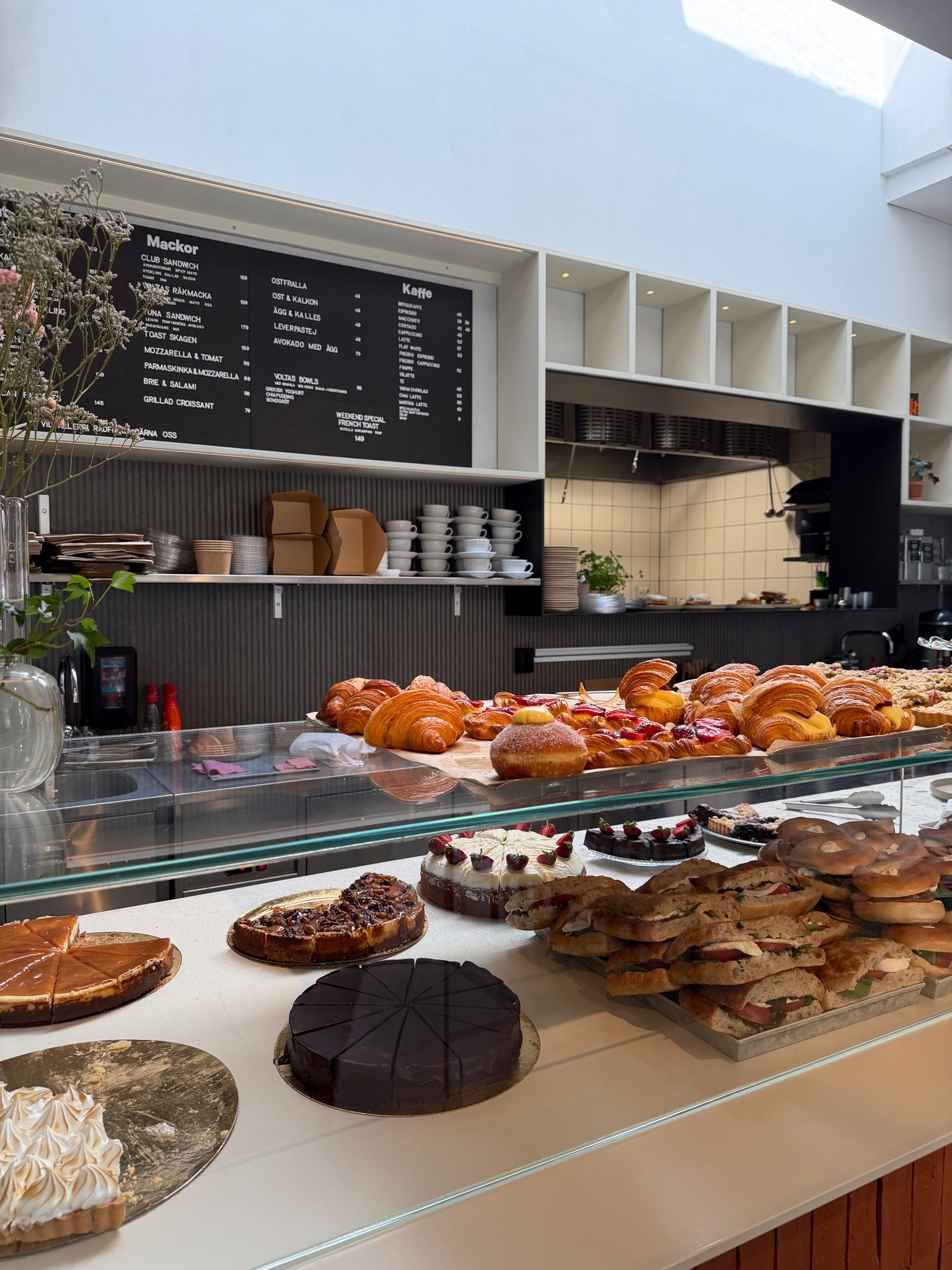
Bakeries are extremely prevalent in Sweden, and “kanelbulle” (cinnamon buns, but not like the US kind) are a welcome constant throughout the year.
# New places to visit
After 15 years of living in Edinburgh we felt like we’d done it all, even if we did love the city. Stockholm has around double the number of people compared to Edinburgh (~1m vs ~500k). We’re relishing having a new country to learn about, and Stockholm has many different areas so we’re still enjoying exploring each one.
Skansen (an open-air museum and zoo), and Djurgården (a royal island) are personal favourites.


# Conclusion
We’re very happy with our decision to move, despite the uncertainties of living on a visa. Sweden is a great country and Stockholm is particularly special. The UK is still a strong part of our identities and we enjoy visiting our friends and families, as tourists.
I feel strongly about Europe and in the value of countries with individual identities and cultures working together to improve the lives of its citizens. All countries have challenges and I appreciate how Sweden and the Nordics take quite a practical and pragmatic approach to working on those problems.
We hope to be fortunate enough to live here for a long time to come!